Major expansion plans at Oslo Airport: Meeting future growth and export needs
8.4.2026 12:00:00 CEST | The Avinor Group | Press release
Oslo Airport is taking steps to ensure that Norway’s main airport remains efficient and competitive in the face of increasing export, import and passenger traffic. Through a comprehensive modernisation plan, the airport can optimise cargo capacity, free up important areas and facilitate new business development.
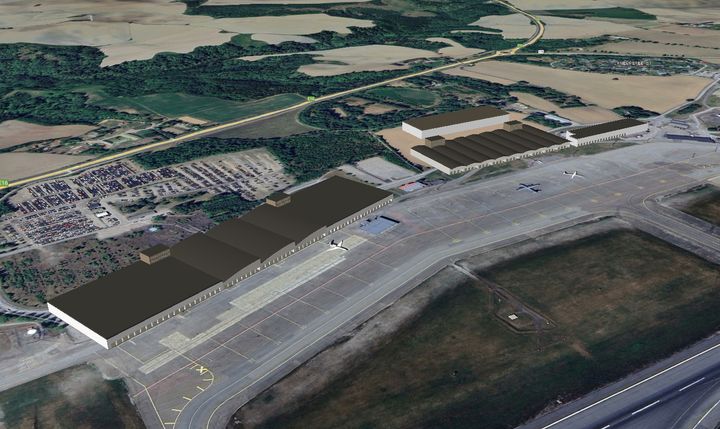
“We have essentially put the entire Oslo Airport on the drawing board,” says Thorgeir Landevaag, airport director at Oslo Airport, about the plans for the future main airport.
Oslo Airport has initiated planning work to address future growth in Norwegian export, import and passenger traffic. The initiative is part of a larger modernisation plan for Oslo Airport and marks the start of extensive efforts to secure an efficient, sustainable and competitive main airport for Norway in the decades to come. The main airport is already experiencing a shortage of aircraft parking spaces, while the cargo market has grown at record speed in recent years.
“We need to take action on capacity quite promptly, while also looking further ahead. That’s why we’ve developed a concept that we believe will stand the test of time and at the same time accommodate future space requirements. With this initiative, we are ensuring that Norway retains a robust, efficient and forward-looking main airport for generations to come,” explains Landevaag. He emphasises that these are proposals and plans for the future, and that several decisions remain to be made.
Building a new cargo area
Norway depends on a strong and well-functioning cargo system for seafood and other critical goods. Seafood is the country’s second largest export, and Oslo Airport is a central hub in the global transport chain.
“The plans involve moving today’s cargo area to the west side of the airport, with new associated cargo and logistics terminals. This will secure both capacity and delivery stability for an industry that is crucial for national logistics preparedness and export strength, and not least create many new jobs,” says the airport director.
Establishing the cargo area on the west side will also free up space and capacity that can be used for further development of passenger traffic and new routes.
“The airport currently has a shortage of aircraft parking spaces at night and during peak periods. The alternative is to build new parking spaces in less central areas of the airport, but that is far more cost-intensive. With this concept, we can reuse the infrastructure we already have,” he explains.
Optimising the runways
Avinor will also optimise the use of the current two runways and introduce technical and operational measures such as rapid exits. This will allow for more aircraft movements without significant land or environmental impact. The new capacity utilisation may therefore postpone the need for a third runway, while the airport can meet increasing demand in the years ahead.
“We are also looking at how the terminal can be fully utilised and, in the longer term, expanded, but this is further down the line. This initiative will create ripple effects far beyond the airport. With these measures, we are laying the groundwork for new jobs and strengthened business development throughout the Eastern Norway region. At the same time, space and capacity will be freed up for further development of passenger traffic and new routes – with direct significance for both rural areas and Norwegian export industries.”
The project as a whole is estimated to be ready by 2040, with the cargo area as the first phase – subject to necessary investment decisions and further approval.
Keywords
Contacts
Eva Beate LandeAvinor AS / Cargo
Tel:+47 47763424Eva.Beate.Lande@avinor.noPress service for journalists
Tel:+47 918 15 614presse@avinor.noAvinor is a wholly-owned state limited company under the Norwegian Ministry of Transport and Communications and is responsible for 44 state-owned airports. Avinor has taken a leading role in reducing climate gas emissions from the aviation industry, including the development of electric aircrafts and supplying sustainable jet-biojetfuel. Avinor provides safe and efficient travels for around 50 million passengers annually, half of which travel to and from Oslo Airport. Over 3000 employees are responsible for planning, developing and operating an efficient airport and air navigation service. Avinor is financed via airport charges and commercial sales. The air navigation services is organized as subsidiary wholly-owned by Avinor. Avinor's headquarter is in Oslo.
Subscribe to releases from The Avinor Group
Subscribe to all the latest releases from The Avinor Group by registering your e-mail address below. You can unsubscribe at any time.
Latest releases from The Avinor Group
Avinor is launching multiple contracts within Food & Beverage (F&B) and Kiosk/Convenience18.5.2026 12:00:00 CEST | Press release
Avinor is launching new contracts across eight airports with an estimated total value of approximately NOK 3,5 billion. A total of 35 contracts has been announced, with durations of five or seven years, covering F&B spaces, kiosk/convenience stores and self-service solutions.
Stable April – growth so far this year11.5.2026 14:30:00 CEST | Press release
The number of travelers at Avinor’s airports remained stable in April. A total of 4.3 million passengers travelled, roughly at the same level as last year, while figures for the first four months of the year show clear growth.
Eirik Wæraas appointed Vice President of Traffic Development at Avinor11.5.2026 13:12:36 CEST | Press release
Avinor has appointed Eirik Wæraas as its new Vice President of Traffic Development. This appointment strengthens Avinor’s efforts to further develop its route network and enhance Norway’s connectivity with the rest of the world.
New Direct Routes Between Gdańsk - Oslo and Bergen29.4.2026 08:00:00 CEST | Press release
LOT Polish Airlines is expanding its network with new direct routes between Gdańsk in Poland and Oslo and Bergen, with operations set to begin this spring.
Avinor to Explore the Potential for Dedicated Airspace Routes for Electric Aviation28.4.2026 14:00:00 CEST | Press release
In connection with the publication of the final report from the test project with BETA Technologies and Bristow at the Aviation Conference in Bodø on Tuesday 28 April, the project partners are now summarising the experience gained from Norway’s first full‑scale test programme of electric aircraft operating in controlled airspace.
In our pressroom you can read all our latest releases, find our press contacts, images, documents and other relevant information about us.
Visit our pressroom