
Avinor to Explore the Potential for Dedicated Airspace Routes for Electric Aviation
28.4.2026 14:00:00 CEST | The Avinor Group | Press release
In connection with the publication of the final report from the test project with BETA Technologies and Bristow at the Aviation Conference in Bodø on Tuesday 28 April, the project partners are now summarising the experience gained from Norway’s first full‑scale test programme of electric aircraft operating in controlled airspace.
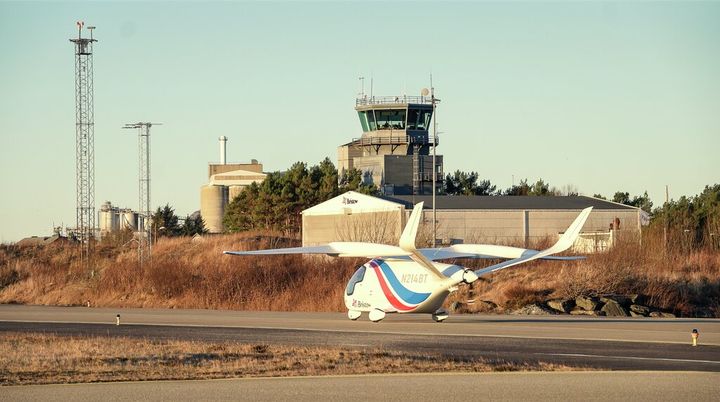
Over a six‑month period, 126 flights were conducted. The tests demonstrate that electric aircraft can operate safely alongside conventional air traffic. Avinor will now assess how electric aircraft can be well integrated into Norwegian airspace.
“Avinor will be a driving force and enabler for fossil‑free aviation. Prioritising and placing new, zero‑emission aircraft in the airspace in a smart way can be one such measure – not unlike how electric cars were once given access to public transport lanes,” says Jan Gunnar Pedersen, Executive Vice President of Avinor Air Navigation Services.
Safe in Traffic – Now Scaling Is the Next Step
“The results open up new opportunities, such as more direct routings, greater flexibility in altitude changes and improved noise considerations,” Pedersen says.
Today’s airspace is largely designed for aircraft with high climb performance. For battery‑electric aircraft, long climb phases, fixed altitudes and circuitous routings can reduce range and operational flexibility.
“We have demonstrated that electric aircraft can operate side by side with other aviation without compromising safety. Now we must enable scaling,” says Pedersen.
The final report shows that electric aircraft can operate safely and efficiently in Norway. At the same time, the tests point to a need for adaptations to airspace design and regulations before the technology can be scaled for commercial operations.
The Need to Design Dedicated “E‑Routes”
Experience from the test programme indicates that electric aircraft perform best at lower altitudes and with more direct routings. This results in lower energy consumption, simpler flight planning and increased safety margins.
“If we are to introduce electric aircraft into commercial aviation, we must develop procedures and routes that are tailored to this type of aircraft – so‑called ‘e‑routes’,” Pedersen says.
“Our flights in the International Test Arena clearly demonstrated the capability of electric aircraft to deliver sustainable, economical and efficient air transport services, especially in areas where geographic challenges make access difficult. To truly unlock the full potential of these aircraft across the aviation eco‑system however, the collaborative development of routings that complement the unique characteristics of these aircraft is necessary and we look forward to working with Avinor to develop such routes,” says Simon Meakins, Director Advanced Air Mobility, Bristow Group.
Regulations and Reserves Must Also Be Assessed
Regulatory frameworks will also need to evolve to accommodate electric aircraft. The tests show that existing requirements for energy reserves and alternate airports may impose operational limitations on aircraft with shorter range.
“Electric aircraft have different characteristics from conventional aircraft. This means that regulations may need to evolve alongside new technology, provided safety is ensured through other, equally robust solutions. Our experience provides an important knowledge base for further regulatory work, both nationally and internationally.”
“The tests provide a solid foundation for future decisions concerning airports, airspace and regulation. If electric aviation is to succeed, authorities, operators, manufacturers and infrastructure providers must work closely together,” Pedersen concludes.
About the international test arena
Norway as an international test arena for zero‑ and low‑emission aviation is a government‑led initiative established by Avinor and the Civil Aviation Authority Norway, with financial support from the Norwegian Government. The test arena aims to enable a faster and more predictable introduction of new aviation technologies through practical testing and the development of regulatory frameworks.
Facts:
- Six‑month test period
- 126 flights conducted
- Test aircraft: ALIA CX300 electric cargo aircraft
- Operations conducted under both visual and instrument flight rules
- Flights carried out at seven Norwegian airports of varying size, traffic volume and complexity
- Conducted in normal operational environments, involving interaction between pilots, air traffic controllers and airports
Keywords
Contacts
Margareth AskeAvinor
Tel:+4792667083margareth.aske@avinor.noImages

Links
Avinor is a wholly-owned state limited company under the Norwegian Ministry of Transport and Communications and is responsible for 44 state-owned airports. Avinor has taken a leading role in reducing climate gas emissions from the aviation industry, including the development of electric aircrafts and supplying sustainable jet-biojetfuel. Avinor provides safe and efficient travels for around 50 million passengers annually, half of which travel to and from Oslo Airport. Over 3000 employees are responsible for planning, developing and operating an efficient airport and air navigation service. Avinor is financed via airport charges and commercial sales. The air navigation services is organized as subsidiary wholly-owned by Avinor. Avinor's headquarter is in Oslo.
Subscribe to releases from The Avinor Group
Subscribe to all the latest releases from The Avinor Group by registering your e-mail address below. You can unsubscribe at any time.
Latest releases from The Avinor Group
Avinor is launching multiple contracts within Food & Beverage (F&B) and Kiosk/Convenience18.5.2026 12:00:00 CEST | Press release
Avinor is launching new contracts across eight airports with an estimated total value of approximately NOK 3,5 billion. A total of 35 contracts has been announced, with durations of five or seven years, covering F&B spaces, kiosk/convenience stores and self-service solutions.
Stable April – growth so far this year11.5.2026 14:30:00 CEST | Press release
The number of travelers at Avinor’s airports remained stable in April. A total of 4.3 million passengers travelled, roughly at the same level as last year, while figures for the first four months of the year show clear growth.
Eirik Wæraas appointed Vice President of Traffic Development at Avinor11.5.2026 13:12:36 CEST | Press release
Avinor has appointed Eirik Wæraas as its new Vice President of Traffic Development. This appointment strengthens Avinor’s efforts to further develop its route network and enhance Norway’s connectivity with the rest of the world.
New Direct Routes Between Gdańsk - Oslo and Bergen29.4.2026 08:00:00 CEST | Press release
LOT Polish Airlines is expanding its network with new direct routes between Gdańsk in Poland and Oslo and Bergen, with operations set to begin this spring.
Avinor is launching new kiosk/convenience store tenders with an estimated combined value exceeding NOK 2 billion.14.4.2026 15:02:00 CEST | Press release
Avinor is now launching tenders for the operation of kiosk/convenience store concessions with an estimated combined value exceeding NOK 2 billion over a five-year period.
In our pressroom you can read all our latest releases, find our press contacts, images, documents and other relevant information about us.
Visit our pressroom