
Rainbow trout store more omega-3 in the fillet than salmon
26.2.2026 15:24:43 CET | Nofima | Press release
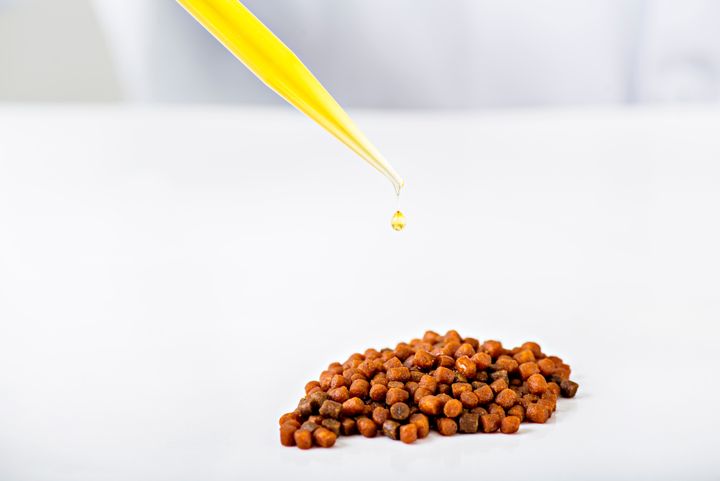
Research shows that feeding rainbow trout more omega-3 than normal does not improve health, survival or confer other benefits to farmed fish. However, the research documents that rainbow trout store more omega-3 from the feed in the fillet than salmon do.
Rainbow trout share many characteristics with salmon and are often compared with this dominant farmed species in Norway. While farmed rainbow trout accounted for 6 per cent of salmonid sales in 2024, salmon accounted for 94 per cent, according to figures from the Norwegian Directorate of Fisheries.
“Much of the knowledge we have on salmonids comes from research on salmon. But the species are not the same, so it is important that we obtain specific knowledge about rainbow trout,” says Marta Bou, a scientist at Nofima.
The omega-3 fatty acids EPA and DHA are important nutrients for salmonids. At the same time, marine fatty acids are a limited resource that must be used efficiently. Studies in salmon have shown that higher levels of EPA and DHA can improve fish health, robustness and quality. Nevertheless, little is known about how high levels of omega-3 affect rainbow trout in commercial sea-cage farming. For this reason, Nofima has participated in research on feed effects in Cargill’s research licence, which is operated by Hofseth Aqua. In this work, the scientists have examined in depth the mechanisms by which omega-3 fatty acids act in cells.
Feeding trials in sea-cages
In a full-scale sea-cage trial, the effects of a standard level and an elevated level of omega-3 were tested. The fish were stocked in cages at three different sites at the west coast of Norway, at different times of the year. The scientists assessed growth, welfare, survival and fillet quality. In parallel, they carried out an indoor comparative study of rainbow trout and Atlantic salmon at Nofima’s research station at Sunndalsøra, where they investigated whether there were differences between salmon and rainbow trout in uptake and metabolism of omega-3 fatty acids.
“We documented clear differences between salmon and rainbow trout. Rainbow trout store more omega-3 in the fillet than salmon given the same feed. At the same time, extra omega-3 did not result in better health, survival or other production benefits in rainbow trout under these conditions, as it does in salmon,” says Bou.
Enough omega-3 for consumers
The study showed that trout given standard feed had around 20 mg EPA+DHA per gram of fillet, while trout given the elevated level had around 26 mg per gram of fillet. Salmon given the elevated level ended up with just over 16 mg per gram of fillet. According to the European Food Safety Authority (EFSA), an average adult needs 250 mg EPA+DHA per day in their diet.
“If I eat 125 grams of rainbow trout fillet, I cover my entire daily requirement when the fish has been given standard feed. Even though I get more than my daily requirement with the high omega-3 feed, that does not necessarily mean that this level represents good overall resource use,” says Bou.
Cargill underlines the importance for rainbow trout research:
“There are many similarities between salmon and trout, and over the years a great deal of knowledge has been transferred between the species. The results from this research project show how important it is to invest in research on rainbow trout,” says Terje Utne, who is responsible for field trials at Cargill.
Keywords
Contacts
Reidun Lilleholt Kraugerud
Tel:48197382reidun.lilleholt@nofima.noMarta Bou Mira
Tel:+47 45861831marta.bou@nofima.noTerje UtneTrial Application ScientistCargill Global Salmon
Tel:+47 419 07 260terje_utne@cargill.comImages


About Nofima
The Norwegian food research institute Nofima provides research based knowledge and innovations for actors in all parts of the food systems.

Subscribe to releases from Nofima
Subscribe to all the latest releases from Nofima by registering your e-mail address below. You can unsubscribe at any time.
Latest releases from Nofima
Could fish by-products improve plant-based food?17.9.2026 12:13:36 CEST | Press release
A new PhD thesis from Nofima shows how the potential of side streams from the fish industry can be harnessed in plant-based products. That potential lies in modern processing technology.
Fiskerester kan øke næringsverdien til plantebasert mat10.9.2026 15:17:32 CEST | Pressemelding
En ny doktorgrad viser hvordan potensialet i sidestrømmer fra fiskeindustrien kan utnyttes i planteprodukter. Potensialet ligger i moderne prosesseringsteknologi.
Vi overvurderer egen beredskap21.8.2026 06:00:00 CEST | Pressemelding
Over halvparten av oss tror det er sannsynlig at vi må klare oss med egen mat i én uke. Likevel har bare rundt én av fire et eget beredskapslager hjemme, ifølge nye tall fra Follostudien.
Follo-folk setter sunnhet først2.7.2026 07:00:00 CEST | Pressemelding
De første resultatene fra Follostudien er klare. 825 innbyggere fra de seks Follo-kommunene har fortalt forskerne ved Nofima om matvanene sine. Funnene viser at det bor matglade mennesker i hele regionen, selv om flertallet prioriterer sunnhet over ren nytelse i matveien.
Fatty acid from herring may ease mild psoriasis10.6.2026 10:30:09 CEST | Press release
Laboratory tests on skin cells suggest that the fatty acid omega‑11 can dampen inflammation linked to psoriasis.
In our pressroom you can read all our latest releases, find our press contacts, images, documents and other relevant information about us.
Visit our pressroom