
Depriving girls of secondary education translates to a loss of at least US$500 million for Afghan economy in last 12 months
15.8.2022 10:16:18 CEST | UNICEF Norge | Press release
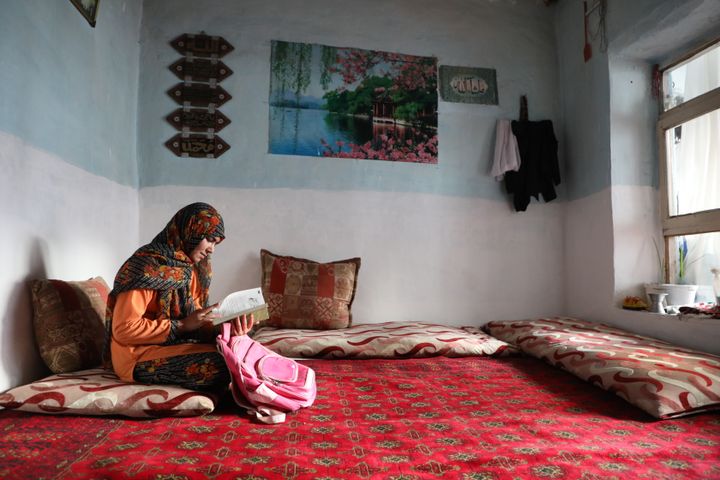
If the current cohort of three million girls were able to complete their secondary education and participate in the job market, girls and women would contribute at least $5.4 billion to Afghanistan’s economy.
UNICEF’s estimates do not take into account the non-financial impacts of denying girls access to education, such as upcoming shortages of female teachers, doctors and nurses, the ensuing impact on decreasing attendance for girls in primary school and increasing health costs related to adolescent pregnancy. The estimates also do not account for the broader benefits of education, including overall educational attainment, reduced child marriage and reduced infant mortality.[i]
“The decision on March 23, not to allow girls back to secondary school was shocking and deeply disappointing. Not only does it violate girls’ fundamental right to education, it exposes them to heightened anxiety, and greater risk of exploitation and abuse, including child trafficking, early and forced marriage,” said UNICEF Afghanistan Representative, Dr. Mohamed Ayoya. “Now, this new analysis clearly articulates the terrible economic impact of this decision on the country’s GDP.”
Even before the Taliban seized power on August 15 last year, Afghanistan struggled with over 4.2 million children out of school; 60 per cent of whom were girls. Although the potential costs of not educating boys and girls alike are high in terms of lost earnings, not educating girls is especially costly because of the relationship between educational attainment and girls delaying marriage and childbearing, participating in the workforce, making choices about their own future and investing more in the health and education of their own children later in life. The analysis indicates that Afghanistan will be unable to regain the gross domestic product (GDP) lost during the transition and reach its true potential productivity without fulfilling girls' rights to access and complete secondary school education.
“UNICEF wants to see every girl and boy across Afghanistan in school and learning,” said Dr. Ayoya. “We will not stop advocating until that goal is achieved. Not only is education a right for every child, it is the foundation for future growth in Afghanistan.”
In addition to girls not being able not to return to secondary schools, UNICEF is also struggling to reach adolescent girls with the vital services they need, such as anaemia prevention support and menstrual health and hygiene, which UNICEF used to provide at schools.
Child malnutrition is also increasing. In June 2021, 30,000 children were treated for severe acute malnutrition in Afghanistan; in June 2022, 57,000 children were admitted -- a 90 per cent increase. Children are being obliged to work to support their families instead of going to school which is the safest place they could be.
In the last 12 months, schools-based health and nutrition services have reached 272,386 adolescent girls with iron and folic acid supplements. So, adolescent girls' inability to continue their education compromises their health.
“Afghanistan remains one of the most complex and multidimensional worldwide children’s crises,” said Dr. Ayoya. “This is a pivotal juncture for a generation of children in Afghanistan. Girls’ rights are under attack; their childhoods are marred by deprivation. That is why, despite challenges in the operating environment, UNICEF is scaling up, delivering, and achieving results like never before. As we do this, we want to say to the people of Afghanistan: we could not do what we do without your trust and support. We also thank our donors and partners for their generosity to date, but we urge them to continue their lifesaving support to children – especially with winter around the corner.”
#####
For more information please contact:
Sam Mort, Chief of Communication, UNICEF Afghanistan, Tel: +93 799 98 7110, smort@unicef.org
Multimedia content can be found HERE.
Note on methodology: The basic idea behind wage premiums is that the economic impact of any level of education can be measured by the effect of schooling on labour productivity and wages. To capture the financial returns of education, observable wage differences between workers with different education levels in the labour market can be used.
For this analysis, UNICEF used the estimates provided in the World Bank’s 2018 study ‘Managed labor migration in Afghanistan.’
For further information, a three-page executive summary can be found here.
Contacts
Anne-Mali ThyrumKommunikasjonsrådgiverAvdeling Kommunikasjon
Tel:+47 482 23 633anne-mali.thyrum@unicef.noStian LybergKommunikasjonsdirektørAvdeling Kommunikasjon
Tel:+47 988 32 578stian.lyberg@unicef.noImages
About UNICEF Norge
Subscribe to releases from UNICEF Norge
Subscribe to all the latest releases from UNICEF Norge by registering your e-mail address below. You can unsubscribe at any time.
Latest releases from UNICEF Norge
UNICEF er allerede på bakken når jordskjelvet rammer barna i Venezuela hardest26.6.2026 10:40:00 CEST | Pressemelding
Anslagsvis 3,9 millioner barn bor i de rammede områdene. UNICEF advarer om akutt fare for sykdom, underernæring og avbrutt skolegang – og mobiliserer et av verdens største humanitære forsyningssystemer for barn.
Ny styreleder i UNICEF Norge10.6.2026 08:22:08 CEST | Pressemelding
I dag presenterer UNICEF Norge sitt nye styre for de neste to årene. Det nye styret samler spisskompetanse fra flere fagområder, blant annet finans, HR, strategi og bistand.
UNICEF-sjefen til Norge: Advarer om økende sultkrise mens norsk bistand vurderes19.5.2026 14:30:56 CEST | Pressemelding
UNICEFs generalsekretær Catherine Russell besøker Norge 21.–22. mai, samtidig som regjeringen gjennomfører Prosjekt Vendepunkt – en omfattende gjennomgang av norsk bistand. Besøket finner sted i en tid med økende globale humanitære behov, der prioriteringene i norsk utviklingspolitikk kan få direkte konsekvenser for barn i noen av verdens mest utsatte områder.
Ny UNICEF-rapport: Familiefattigdommen økte – Norge slått av Danmark og Island i fysisk helse12.5.2026 06:00:00 CEST | Pressemelding
Rapporten viser at Norge har hatt en økning i familiefattigdom på mer enn 10 prosent på ti år, i perioden 2012-2022. Norge scorer dårligere enn flere nordiske land på fysisk helse og skoleresultater.
Renate Reinsve er ny UNICEF-ambassadør10.3.2026 12:43:27 CET | Pressemelding
Den prisbelønte og Oscar-nominerte skuespilleren Renate Reinsve er utnevnt til nasjonal ambassadør for UNICEF Norge.
In our pressroom you can read all our latest releases, find our press contacts, images, documents and other relevant information about us.
Visit our pressroom