
New study challenges claims of ‘safer’ cluster munitions
16.9.2026 17:37:08 CEST | Norsk Folkehjelp | Press release
A new independent technical study commissioned by Norwegian People’s Aid finds no clear evidence that technological developments have overcome the fundamental humanitarian problems associated with cluster munitions. The findings were presented on 16 September at the Third Review Conference of the Convention on Cluster Munitions in Vientiane, Lao PDR.
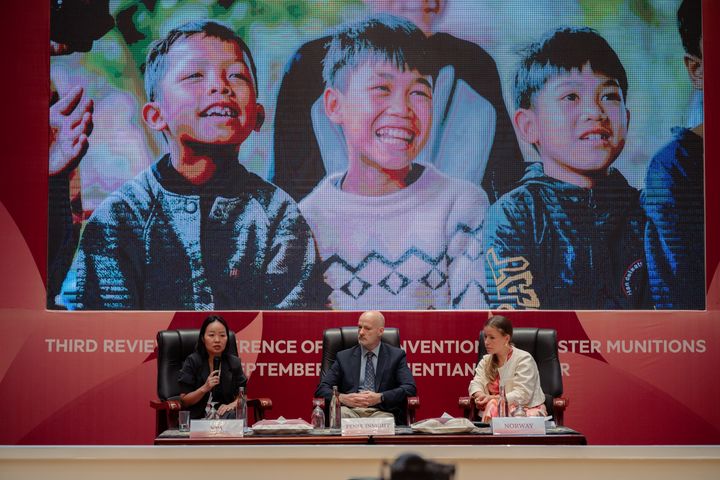
Nearly two decades after governments negotiated the Convention on Cluster Munitions, claims that new technology has made cluster munitions more reliable and minimized the humanitarian harm they cause to civilians, have returned to the international debate.
To examine these claims, Norwegian People’s Aid (NPA) commissioned technical experts Fenix Insight to assess contemporary cluster munitions equipped with self-destruct mechanisms and the available evidence of their performance in the field.
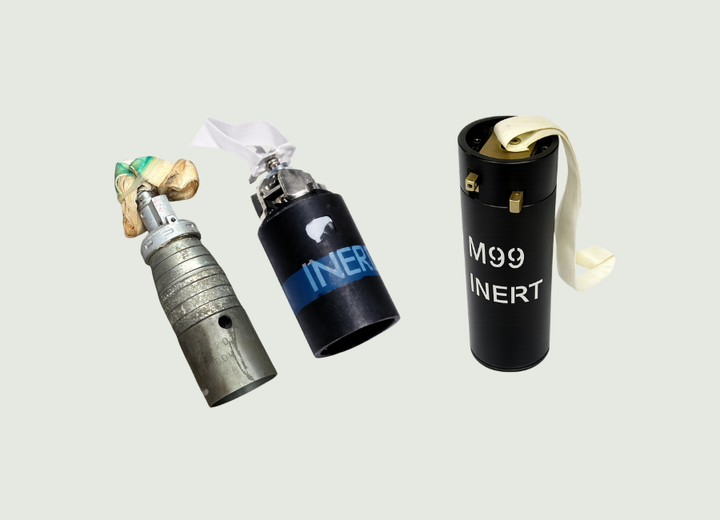
The resulting study, led by weapons expert Colin King, finds that very little is actually new. Of more than 30 types of submunitions with self-destruct mechanisms identified as currently in or available for service, the vast majority predate the adoption of the Convention in 2008. Only three significant new designs were identified as having become available since then: the Russian 3B30, the US M80 and the Israeli M99.
More importantly, the study finds no clear evidence that technological developments since 2008 have overcome the fundamental reliability and post-conflict concerns associated with earlier generations of cluster munitions.
“Claims that technology can make cluster munitions safer are not new. They were closely examined when the Convention was negotiated almost two decades ago. This new research allows us to test those claims against the evidence available today, and we simply do not see evidence that the fundamental humanitarian concerns have been resolved,” says Dagmar Matúšů, Senior Policy Advisor at NPA.
Claims of improved reliability remain unproven
Fenix Insight examined the three only significant new submunition designs developed since the Convention was adopted.
The Russian 3B30 has demonstrated significant failures during operational use in Syria and Ukraine. For the US M80 and Israeli M99, the study finds that there is insufficient publicly available evidence from testing and operational use to substantiate claims of high reliability.
The study also cautions against relying on headline failure rates from controlled testing. Conditions in actual conflict – including terrain, vegetation, weather, storage, handling and the circumstances in which submunitions hit the ground – cannot be fully reproduced in tests.
As Colin King puts it: “The fundamental characteristics of cluster munitions are different from those of other ordnance categories. Many of their failings stem from these characteristics, so cannot be addressed simply by the incorporation of additional features.”

Self-destruct mechanisms can reduce failure rates, but they can themselves fail. In some circumstances, a failed self-destruct mechanism can also create an alternative pathway to initiation, leaving an unexploded submunition in an uncertain and potentially highly sensitive state, creating additional risks for civilians and clearance personnel.
Even a low failure rate can leave thousands of unexploded submunitions
NPA has published a new briefing paper drawing together the findings of the Fenix Insight study and NPA’s earlier research. The briefing stresses that reliability figures alone do not capture the humanitarian consequences of cluster munitions. A single cluster munition can disperse dozens or hundreds of submunitions over an area. This means that even a seemingly low failure rate can leave large numbers of unexploded submunitions behind.
For example, UN estimates indicate that up to four million submunitions were dispersed over southern Lebanon during the 2006 conflict. Even at a hypothetical failure rate of just one per cent, this would have left around 40,000 unexploded submunitions. Actual failure rates were significantly higher.
Nor is unexploded ordnance the only concern. Improvements in reliability do nothing to address the wide-area effects of cluster munitions when they function as intended.
Revisiting the evidence that helped shape the Convention
The new research follows almost 20 years after NPA, the Norwegian Defence Research Establishment and C King Associates published the landmark M85 – An analysis of reliability study.
At the time, the Israeli M85 was presented as one of the most advanced and reliable submunitions available, with a claimed failure rate below one per cent. Research following its use in Lebanon in 2006 instead indicated an operational failure rate of around ten per cent.
The study became an important contribution to the negotiations that led to the adoption of the Convention on Cluster Munitions in 2008.
Today, similar arguments about technological improvements are again appearing in discussions about cluster munitions. The new study concludes that efforts to mitigate humanitarian harm through newer self-destruct systems remain unproven and that those making such arguments need to provide substantially more evidence before claims of high reliability can be substantiated.
New findings presented in Vientiane
The findings were presented on 16 September at an NPA side event during the Third Review Conference of the Convention on Cluster Munitions in Vientiane, Lao PDR.
The event brought together technical expertise and operational experience to examine what has – and has not – changed since the Convention was negotiated, and what recent evidence tells us about the humanitarian consequences of cluster munitions.
For NPA, the central message from the research is that claims about “advanced”, “modern” or “new-generation” cluster munitions should not be accepted at face value. Policymakers should demand transparent evidence, distinguish controlled testing from operational performance, seek independent technical assessment and consider the humanitarian consequences of the weapon as a whole.
“When claims about ‘safer’ or more reliable cluster munitions are used to justify changes in policy, we need to ask what evidence those claims are actually based on. The available evidence does not show that technological developments have removed the humanitarian concerns that led states to prohibit cluster munitions in the first place,” says Matúšů.
Keywords
Contacts
Ingebjørg SørenesSenior Communications AdvisorSeniorrådgiver kommunikasjon
Mine Action and Disarmament
Håkon ØdegaardNorsk Folkehjelp/Norwegian People's Aid
Tel:95045667hakono@npaid.orgLinks
Subscribe to releases from Norsk Folkehjelp
Subscribe to all the latest releases from Norsk Folkehjelp by registering your e-mail address below. You can unsubscribe at any time.
Latest releases from Norsk Folkehjelp
Norwegian People's Aid says no to U.S. Department of State funding under new conditions3.9.2026 13:30:00 CEST | Pressemelding
“The U.S. Department of State is seeking to impose conditions that would require us to abandon our commitment to equality and diversity not only in programmes it funds, but across all our work, including activities supported by other donors. We cannot accept that. We comply with Norwegian law and Norwegian policy, and our values are not for sale,” says Raymond Johansen, Secretary General of Norwegian People’s Aid (NPA).
Norsk Folkehjelp sier nei til USAs nye vilkår for bistand, mister 1700 ansatte globalt3.9.2026 13:30:00 CEST | Pressemelding
- USA forsøker å diktere at vi skal slutte å jobbe for likestilling og mangfold. Ikke bare i programmene de selv finansierer, men i alt vi gjør, også prosjekter som støttes av andre givere. Det sier vi nei til. Vi forholder oss til norsk lov og norsk politikk og bytter ikke verdier mot penger, sier Raymond Johansen, generalsekretær i Norsk Folkehjelp.
Norsk Folkehjelps partner med nødhjelp til jordskjelvet i Colombia11.8.2026 10:20:27 CEST | Pressemelding
Norsk Folkehjelps partner Proceso de Comunidades Negras (PCN) samler inn og deler ut nødhjelp til lokalsamfunn i Chocó-regionen i Colombia, som mandag ble rammet av et kraftig jordskjelv. PCN samler inn mat, hygieneartikler, bleier og babyutstyr, førstehjelpsutstyr og madrasser og tepper.
Norsk Folkehjelp: Denys (25) og Ruslan (26) drept i angrepet i Ukraina26.6.2026 15:44:23 CEST | Pressemelding
Denys Butsnev (25) og Ruslan Simonenko (26) ble drept i et angrep på Norsk Folkehjelps mineryddere i Kherson oblast sør i Ukraina onsdag 24. juni.
Norwegian People’s Aid mourns two colleagues killed in Ukraine26.6.2026 15:15:29 CEST | Pressemelding
Denys Butsnev (25) and Ruslan Simonenko (26) were killed in an attack on Norwegian People’s Aid’s demining team in Kherson Oblast, southern Ukraine, on Wednesday 24 June.
In our pressroom you can read all our latest releases, find our press contacts, images, documents and other relevant information about us.
Visit our pressroom