Democracy News Alliance: Canada must reduce reliance on extractive industries and U.S. exports, report finds
22.4.2025 09:18:09 CEST | news aktuell GmbH | Press release
Los Angeles/Ottawa (DNA) - From dissatisfaction with the Trudeau government to dissatisfaction with Trump’s policies — compounded by general anxiety around tariffs, the economy and a deteriorating relationship with the U.S. — navigating an economic downturn should be an immediate priority for Canada as it heads into a federal election, a new report recommends.
In the long-term, however, it says Canada will need greater economic diversification and regional representation.
“Although it is wealthy by global standards, Canada’s economy faces key vulnerabilities such as excessive reliance on extractive industries, shortages of critical goods like housing and heavy dependence on exports to the U.S.,” states a Canada BGI Report on the country’s governance performance, released a little more than ten days before the April 28 federal election.
The report, based on the Berggruen Governance Index (BGI), was conducted by researchers from the Los Angeles-based Berggruen Institute think tank, the Luskin School of Public Affairs at the University of California Los Angeles (UCLA) and the Hertie School, a German university.
Currently, Canada ranks only 48th on the Economic Complexity Index. “Given its wealth, this is a disproportionately low figure and increasing it should be a top priority,” said the report.
The Berggruen Governance Index (BGI) Project analyzes the relationship between democratic accountability, state capacity and the provision of public goods to develop a deeper understanding of how governments can create a more resilient future for their people.
While Canada scores highly on most measures of the BGI, the report found that Canada’s performance “has been uneven over the last decade” and for many years has failed to address systemic problems.
These problems, however, have been overshadowed by U.S. President Donald Trump.
Until recently, analysts predicted a landslide victory for the Conservatives under Pierre Poilievre, since the Liberals, under former Prime Minister Justin Trudeau, had become deeply unpopular over numerous policy decisions, including immigration.
But the Liberals have “experienced one of the most dramatic electoral turnarounds in recent political history,” according to the Canada BGI Report, attributing the ascension of Trump to the U.S. presidency in January 2025 to this reversal of fortunes.
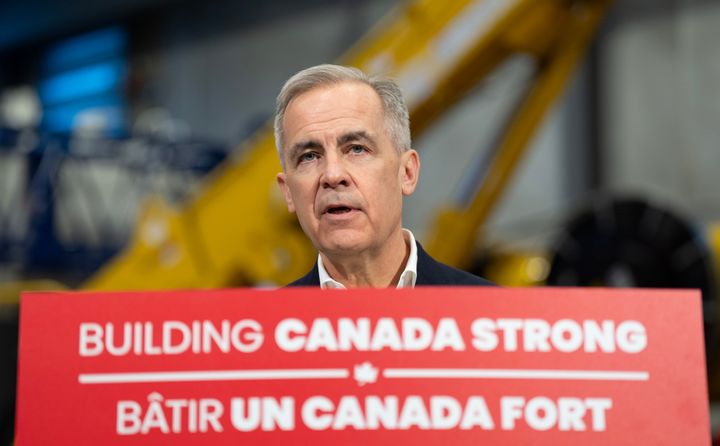
This reversal also coincided with the resignation of Trudeau and the selection of former Bank of Canada and Bank of England Governor Mark Carney as the new Liberal leader.
“Repeated threats of tariffs and even territorial annexation provoked outrage among Canadians and ignited a surge in patriotic sentiment, to which Poilievre’s defeatist ‘Canada is broken’ rhetoric was particularly ill-suited,” the researchers wrote.
Carney has rallied Canadians around national unity — and managed to solidify a poll swing back to the Liberals. What seemed like an inevitable win for the Conservatives just a few months ago has become a close race to the finish line.
While the Canada BGI Report found that Carney’s vision of “One Canadian Economy” appears to be a politically successful response to the crises Canada faces from the U.S., in the long-run Canada will need to contend with “persistent economic tensions” and “overcome governance challenges that predate both Trump and Trudeau”, the report said.
The BGI scores for state capacity and democratic accountability “trail those of many Western European peers,” according to the report, with institutional accountability falling by seven points from 2000 to 2021.
This indicates disillusionment with Canada’s institutions; researchers found that public trust in government steadily declined throughout the 2010s. “Coupled with eroding faith in democratic institutions and lingering regional tensions, the previous unpopularity of Trudeau’s Liberals appears to reflect systemic issues rather than an anomaly,” according to the Canada BGI Report.
A major flashpoint for Canadians is immigration. Canada has long been a supporter of greater immigration but, by 2024, public sentiment had shifted — helping to propel the Conservatives to the top of the polls. Canada’s international migration surged 15-fold under Trudeau — with the aim of meeting the country’s current labour shortage — but Ottawa started coming under fire for housing inflation.
Canada has one of the highest housing price-to-income ratios in the developed world, according to the OECD. One reason is stagnant homebuilding, with the number of dwellings per 1,000 residents far below the G7 standard. With homeownership rates declining, that has led to increasing backlash toward immigrants and newcomers.
Canada has also struggled with excessive reliance on extractive industries and heavy dependence on exports to the U.S. With current tensions between Canada and the U.S., “reliance on both oil and exports remains a major feature of the country’s economy and has recently been exposed as a geoeconomic vulnerability,” according to the researchers.
However, the persistent challenges of regional representation and limited state capacity “will make it increasingly challenging to enact far-reaching plans for economic integration and greater political sovereignty.”
The report said that addressing these challenges will require investments in state capacity, economic diversification — both sectorally and geographically — and building greater democratic legitimacy through regional inclusion.
Researchers recommend the next government “complete Trudeau’s unfinished goal of introducing a proportional representation system” that includes greater geographic representation and inclusion of First Nations peoples, which will be “critical for increasing legitimacy and national unity.”
Polls now project a Liberal majority in the House of Commons.
----------------------------------------------
This text and the accompanying material (photos and graphics) are an offer from the Democracy News Alliance, a close co-operation between Agence France-Presse (AFP, France), Agenzia Nazionale Stampa Associata (ANSA, Italy), The Canadian Press (CP, Canada), Deutsche Presse-Agentur (dpa, Germany) and PA Media (PA, UK). All recipients can use this material without the need for a separate subscription agreement with one or more of the participating agencies. This includes the recipient's right to publish the material in own products.
The DNA content is an independent journalistic service that operates separately from the other services of the participating agencies. It is produced by editorial units that are not involved in the production of the agencies' main news services. Nevertheless, the editorial standards of the agencies and their assurance of completely independent, impartial and unbiased reporting also apply here.
Contact: Democracy News Alliance, Christian Röwekamp, roewekamp.christian@dpa.com
Images

Subscribe to releases from news aktuell GmbH
Subscribe to all the latest releases from news aktuell GmbH by registering your e-mail address below. You can unsubscribe at any time.
Latest releases from news aktuell GmbH
Polarise Launches Sovereign AI Cloud at NVIDIA GTC Berlin, Delivering Enterprise AI From Data Center to Application22.10.2026 10:00:00 CEST | Press release
With Polarise Rise and Polarise Drive, the German AI provider extends its own European AI Factories into a full-stack sovereign cloud
Democracy News Alliance: Fiscal strength doesn't guarantee public goods delivery, US study finds21.10.2026 09:55:20 CEST | Press release
New York/DNA - A newly released study of US state government performance found strong partisan and regional patterns within three pillars of governance: democratic accountability, state capacity and public goods provision. Yet, the US states’ outcomes differ in important ways from international comparisons, as the three governance dimensions show limited correlation, the researchers found.
agineo expands partnership with ServiceNow, launches AI Control Tower as a Service20.10.2026 13:06:01 CEST | Press release
New managed service provides transparency into the AI landscape and helps companies centrally manage AI, monitor risks and regulatory requirements, and highlight business benefits.
Grünenthal advances proprietary Nociceptin Receptor (NOP) Agonist into Phase II trial in acute pain20.10.2026 10:17:49 CEST | Press release
Potential first-in-class, selective nociceptin receptor (NOP) agonist that aims to provide safe, effective treatment for moderate to severe acute pain. Following successful Phase I results earlier this year demonstrating an excellent safety profile, the program has now progressed to Phase II. The randomized, double-blind, double-dummy, placebo- and active controlled, 2-part Phase II trial will evaluate the safety, tolerability and efficacy of this novel NOP agonist in patients post bunionectomy surgery. Grünenthal anticipates reporting results in early 2028.
Democracy News Alliance: Elections will determine whether Israel remains the Middle East’s only democracy, new report says16.10.2026 12:58:26 CEST | Press release
Los Angeles/DNA - For the first time since the Hamas attacks of three years ago, Israel is set to go to the polls on October 27 to elect the members of the 26th Knesset. In 2023 the country was in the top group of ‘consolidated democratic states’, according to the 2026 Berggruen Governance Index (BGI), just as it had been in 2000. However, according to a new report from governance experts, the wars unleashed on multiple fronts in rapid succession following the Hamas attacks launched from Gaza have changed Israel politically, economically, and socially.
In our pressroom you can read all our latest releases, find our press contacts, images, documents and other relevant information about us.
Visit our pressroom