Democracy News Alliance: Researchers: The future of democracy is on the ballot in Europe
29.5.2024 08:50:05 CEST | news aktuell GmbH | Press release
Europe’s right-wing parties are preparing to pounce on voter dismay following years of austerity policies in many countries, say leading global governance researchers in a new report released on the eve of the European Parliament elections.
Brussels (DNA) - Researchers behind a new Berggruen Governance Index (BGI) report suggest that polices such as crisis austerity measures and a failure to take pro-active steps to drive growth are behind a drop in the confidence many Europeans have in democratic accountability. This decline is what the report says is fueling a right-wing surge.
«Protest votes often take the form of a far-right vote,» says Edward L. Knudsen, one of the report’s authors and a doctoral researcher in international relations at the University of Oxford. «Austerity creates a rise in far-right populism. Discontent moves right, not left.»
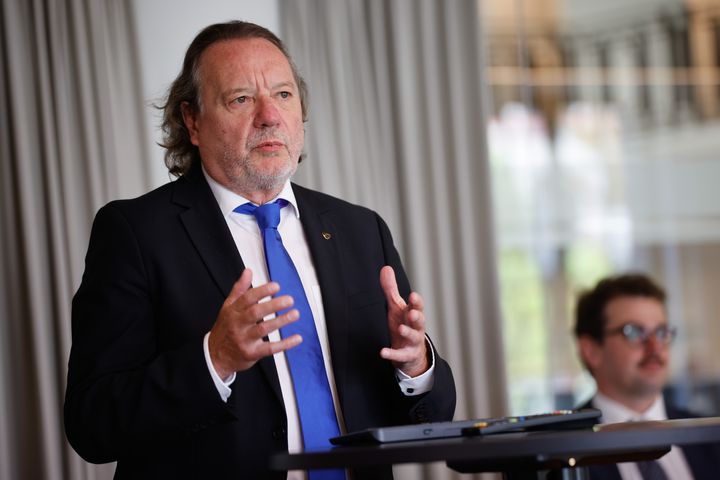
Knudsen and fellow author Helmut K. Anheier were on-hand in Brussels Tuesday to release the findings of «Right-wing Populism, the State, and Democracy: Governance Performance and the 2024 European Parliament Elections». The report, conducted by the Luskin School of Public Affairs at the University of California Los Angeles (UCLA) in co-operation with the Los Angeles-based Berggruen Institute and the Hertie School, a university in Berlin, Germany, seeks to piece together the puzzle to understand why democratic accountability is falling.
The report’s release, which comes less than two weeks before citizens head to the polls for the European Parliament elections, June 6-9, will have little effect on the outcome. «National governments are in the driver’s seat» when it comes to reversing course on years of austerity-driven polices, says Anheier, an Adjunct Professor of Social Welfare at the UCLA Luskin School and Senior Professor of Sociology at the Hertie School.
A downward shift in democratic accountability
Several hundred criteria were used to arrive at the findings, which closely examine the state of democracy. The report shows how the management of many of Europe’s countries has led to a growing backlash and lack of confidence in democracy, which can be traced back to 2010 and the global financial crisis and Eurocrisis.
The researchers shared how although public goods provision remains steady overall, prolonged budget cuts and austerity measures have worsened state capacity and weakened democratic accountability, which is forecasting the right-wing gains.
Based on three main indicators – Democratic Accountability, State Capacity, and Public Goods Provision – the researchers found that Western Europe was generally stronger than Central and Eastern Europe in all three indicators, but declines were seen throughout.
With nine countries showing negative shifts in accountability, the largest slides belonged to Hungary, Slovenia, and Poland. According to Anheier, for every point drop in democratic accountability there is a 1.5 point increase in right-wing vote share.
When asked to share their worst-case scenario, the report’s authors pointed to migration and regional differences as the underlying issues that could further push Europe to the right. Countries showing worrying signs they say are Hungary and Poland due to being left behind economically, and Italy after decades of economic stagnation.
Increasing economic and social anxiety
Although Europe remains a bastion of wealth with a high quality of life compared to other regions in the world, the researchers point to signs of a possible decline in the future. In fact, Europe has the highest quality in terms of public goods, but Anheier and Knudsen see the electorate moving to extreme ends of the political spectrum, predominantly the far right, because of a perceived lack of political choice. Behind a veneer of stability, they say, that development, if not properly addressed, could spiral into a «vicious cycle» that would see continued far right gains amid a fraying social fabric.
«The right pounces on the perception that there is not enough to go around. Housing is an example of this,» says Knudsen, who went on to connect economic anxiety with fears surrounding migration, which has spiked in current years. However, political solutions have come up empty, sparking a populist revolt.
«We have underinvested in state capacity, then austerity kicked in,» eroding state capacity, said Anheier. With governments stuck in a reactive state rather a proactive state, he says they are unable to solve public problems. «The state is hesitant to invest in public. Migration, housing, the cost of living crisis must be solved. If not, they all feed the far right.»
Proactive measures needed
To begin rebuilding faith in democracy, which the researchers say will take multiple elections to do, they are urging governments to put an end to austerity policies that are increasing polarization and weakening Europe’s institutions.
But to improve the long-term outlook, Knudsen and Anheier say that increasing growth is crucial to reducing inequalities, and needed to tackle the duel challenges of climate change and migration. For them, it’s about investing in the future. To do this, it begins with the kinds of politicians being elected. «If we had more business people and entrepreneurs in parliament, it would be much, much better, and we would get a different political culture,» says Anheier.
Knudsen went further: «I think there is an unwillingness to accept that the industrial base and working class has transformed a lot. Really understanding that the future of the economy comes from a very diverse group of people, and is coming from new industries,» such as green industries. But to do this, and to stem the right-wing tide, the researchers are urging governments to begin planning beyond the next election cycle.
Now, the waiting begins to see if the European Parliament elections will show if citizens do demand the accountability the report says is sorely lacking.
Further coverage by the Democracy News Alliance can be found in the DNA digital newsroom at https://www.presseportal.de/en/nr/174021
This text and the accompanying material (photos and graphics) are an offer from the Democracy News Alliance, a close co-operation between Agence France-Presse (AFP, France), Agenzia Nazionale Stampa Associata (ANSA, Italy), The Canadian Press (CP, Canada), Deutsche Presse-Agentur (dpa, Germany) and PA Media (PA, UK). All recipients can use this material without the need for a separate subscription agreement with one or more of the participating agencies. This includes the recipient’s right to publish the material in own products.
The DNA content is an independent journalistic service that operates separately from the other services of the participating agencies. It is produced by editorial units that are not involved in the production of the agencies' main news services. Nevertheless, the editorial standards of the agencies and their assurance of completely independent, impartial and unbiased reporting also apply here.
Contact: Christian Röwekamp, Democracy News Alliance, roewekamp.christian@dpa.com
Images

Subscribe to releases from news aktuell GmbH
Subscribe to all the latest releases from news aktuell GmbH by registering your e-mail address below. You can unsubscribe at any time.
Latest releases from news aktuell GmbH
Polarise Launches Sovereign AI Cloud at NVIDIA GTC Berlin, Delivering Enterprise AI From Data Center to Application22.10.2026 10:00:00 CEST | Press release
With Polarise Rise and Polarise Drive, the German AI provider extends its own European AI Factories into a full-stack sovereign cloud
Democracy News Alliance: Fiscal strength doesn't guarantee public goods delivery, US study finds21.10.2026 09:55:20 CEST | Press release
New York/DNA - A newly released study of US state government performance found strong partisan and regional patterns within three pillars of governance: democratic accountability, state capacity and public goods provision. Yet, the US states’ outcomes differ in important ways from international comparisons, as the three governance dimensions show limited correlation, the researchers found.
agineo expands partnership with ServiceNow, launches AI Control Tower as a Service20.10.2026 13:06:01 CEST | Press release
New managed service provides transparency into the AI landscape and helps companies centrally manage AI, monitor risks and regulatory requirements, and highlight business benefits.
Grünenthal advances proprietary Nociceptin Receptor (NOP) Agonist into Phase II trial in acute pain20.10.2026 10:17:49 CEST | Press release
Potential first-in-class, selective nociceptin receptor (NOP) agonist that aims to provide safe, effective treatment for moderate to severe acute pain. Following successful Phase I results earlier this year demonstrating an excellent safety profile, the program has now progressed to Phase II. The randomized, double-blind, double-dummy, placebo- and active controlled, 2-part Phase II trial will evaluate the safety, tolerability and efficacy of this novel NOP agonist in patients post bunionectomy surgery. Grünenthal anticipates reporting results in early 2028.
Democracy News Alliance: Elections will determine whether Israel remains the Middle East’s only democracy, new report says16.10.2026 12:58:26 CEST | Press release
Los Angeles/DNA - For the first time since the Hamas attacks of three years ago, Israel is set to go to the polls on October 27 to elect the members of the 26th Knesset. In 2023 the country was in the top group of ‘consolidated democratic states’, according to the 2026 Berggruen Governance Index (BGI), just as it had been in 2000. However, according to a new report from governance experts, the wars unleashed on multiple fronts in rapid succession following the Hamas attacks launched from Gaza have changed Israel politically, economically, and socially.
In our pressroom you can read all our latest releases, find our press contacts, images, documents and other relevant information about us.
Visit our pressroom