Democracy News Alliance: Sahel elites must move away from 'zero-sum' policies, report urges
2.5.2024 09:48:23 CEST | news aktuell GmbH | Press release
Los Angeles/DNA - A dual economic strategy focusing on domestic economic development and international partnerships to address the underlying challenges facing the Sahel region could help Burkina Faso, Mali, Niger and Sudan to build more resilient institutions and foster long-term development, a recently published report says.
The report by the Luskin School of Public Affairs at the University of California Los Angeles (UCLA) argues that the four countries should aim to transition away from relying exclusively on resource extraction. It attributes much of the challenges facing the four countries on unsustainable economic policies which focus on the export of raw materials.
Despite some improvements in terms of public goods provision - in particular regarding social and environmental public goods - these countries continue to face significant developmental challenges, ranking among the world's poorest.
Titled "Political Instability and Economic Development in the Sahel: Governance in Burkina Faso, Mali, Niger, and Sudan since 2000", the report provides a comprehensive analysis of the political instability and economic challenges facing the region. It evaluates scores from the Berggruen Governance Index (BGI), which is based on data from 2000 to 2019.
The four countries rank among the 20 lowest ranked nations on the United Nations' Human Development Index. All of them have experienced at least one coup or coup attempt since 2020. In Niger, the military took power in July 2023, in Burkina Faso in 2022, while the most recent coup in Mali took place in 2021. In Sudan, an ongoing violent power struggle between different military factions has caused the world's largest refugee crisis of the past year.
"This political upheaval is both the result and the cause of economic difficulty", the report states. "Scarcity breeds instability, which in turn makes development, investment, and growth more difficult, further fuelling dysfunctional governance, and deepening dependencies."
Before the coup in July 2023, Niger was seen as the last democratic partner of the Western industrialized nations in the region and an ally in the battle against terrorism and migration to Europe. Neighbouring countries Mali and Burkina Faso have also turned against the West and have improved relations with Russia.
The four Sahel states are highly dependent on overseas development aid (ODA), which makes them more susceptible to the policies of their donors. Colonial-era economic structures in the region have led to underdevelopment and inequality. The effects of this legacy can be felt until the present day and have resulted in a hugely uneven distribution of wealth as well as corruption, rent seeking and uneven infrastructure, the report finds.
The former colonial power France has scaled back its military engagement in the Sahel, as have the United States, the European Union, and the United Nations. Washington recently agreed to withdraw around 1,000 troops from Niger, while 12,000 UN peacekeepers are to leave Mali at the end of the year. The European Union Capacity Building Mission (EUCAP) in Niger is also forced to leave.
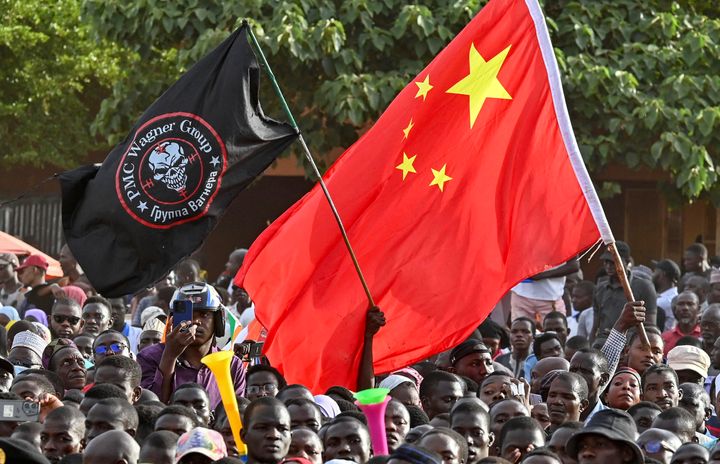
However, this leaves the door open for other players, the authors argue. Russia has become increasingly active, for example via the Wagner group. Trade between the country and the Sahel region has also benefitted from the coups. "China is also an increasingly important player due to its control over supply chains of critical minerals", the report adds.
In the Sahel region, most of the economic output comes from exporting raw materials. Gold, for example, accounts for 74 and 73 percent of export value in Burkina Faso and Mali respectively. Other commodities exported include oil, radioactive ores such as uranium, raw cotton, livestock or palm oil.
With elites competing over the unevenly distributed resources, politics becomes what the authors call "zero sum", with no-one trying to develop the economy further. This dynamic, they say, also serves as an explanation for the recent rash of coups in the region.
The climate crisis adds to the situation, according to the report. For instance, erratic rainfall exacerbates malnutrition, indirectly contributing to violence. On the other hand, the Sahel has a lot of potential for generating solar power. Partnerships with more developed countries or international donors could be particularly helpful to develop the sector.
"The public goods improvements we have witnessed in the Sahel are likely unsustainable in the context of low (and often declining) democratic accountability and a continued reliance of extractive export models and subsistence agriculture, in particular given the high fertility rates in the region, which are among the highest in the world", the report says.
If the states in the Sahel area emphasize domestic economic development, including a focus on the production of value-added goods and sustainable agriculture, they can build resilience and reduce dependency on external actors, the report concludes.
"The EU's best chance at facilitating strong connections and countering geopolitical competitors is by building strong economic ties and mutually beneficial relationships", it says. This is especially vital, it adds, in the face of the rising influence of Russia and China. +++
Further coverage by the Democracy News Alliance can be found in the DNA digital newsroom at https://www.presseportal.de/en/nr/174021
This text and the accompanying material (photos and graphics) is an offer from the Democracy News Alliance, a close co-operation between Agence France-Presse (AFP, France), Agenzia Nazionale Stampa Associata (ANSA, Italy), The Canadian Press (CP, Canada), Deutsche Presse-Agentur (dpa, Germany) and PA Media (PA, UK). All recipients can use this material without the need for a separate subscription agreement with one or more of the participating agencies. This includes the recipient's right to publish the material in own products.
The DNA content is an independent journalistic service that operates separately from the other services of the participating agencies. It is produced by editorial units that are not involved in the production of the agencies' main news services. Nevertheless, the editorial standards of the agencies and their assurance of completely independent, impartial and unbiased reporting also apply here.
Contact: Christian Röwekamp, Democracy News Alliance, roewekamp.christian@dpa.com
Subscribe to releases from news aktuell GmbH
Subscribe to all the latest releases from news aktuell GmbH by registering your e-mail address below. You can unsubscribe at any time.
Latest releases from news aktuell GmbH
Democracy News Alliance: Elections will determine whether Israel remains the Middle East’s only democracy, new report says16.10.2026 12:58:26 CEST | Press release
Los Angeles/DNA - For the first time since the Hamas attacks of three years ago, Israel is set to go to the polls on October 27 to elect the members of the 26th Knesset. In 2023 the country was in the top group of ‘consolidated democratic states’, according to the 2026 Berggruen Governance Index (BGI), just as it had been in 2000. However, according to a new report from governance experts, the wars unleashed on multiple fronts in rapid succession following the Hamas attacks launched from Gaza have changed Israel politically, economically, and socially.
S&D Conference on Quality Jobs: Europe must protect workers through the digital transition16.10.2026 08:58:12 CEST | Press release
Brussels – The Socialists and Democrats (S&D) Group in the European Parliament is stepping up political pressure for an ambitious European framework for quality jobs. At the “Quality Jobs for All” conference in Brussels on 14 October, the impact of artificial intelligence, digital surveillance, precarious employment conditions and growing work-related stress was at the centre of the debate. The conference took place as the European Commission is expected to present its proposal for a Quality Jobs Act in December 2026. Quality Jobs for All is one of the S&D Group’s six flagship political priorities, set out under their Strategic Turn initiative in recent months. Jobs and the labour markets are changing rapidly, with automation and artificial intelligence able to fundamentally change professions and their inherent activities. At the same time, concerns are growing about job cuts, wage pressure, social exclusion and the loss of workers’ voices at work. Experts at the conference have warne
Amid Mounting Global Health Crises, World Health Summit Closes in Berlin with New Commitments14.10.2026 14:43:09 CEST | Press release
Berlin, October 14, 2026 - The World Health Summit 2026 concluded with new funding commitments, research findings, and initiatives. Under the theme “From Crisis to Resilience: Innovating for Health,” the Summit convened more than 4,000 on-site participants from 130 countries and territories, generated over 50,000 livestream views, and featured more than 400 speakers, including 20 ministers and state secretaries, across 76 sessions.
Innomotics Receives Prestigious EcoVadis Silver Medal – First Assessment Places Company Among Top 15% Globally12.10.2026 12:00:00 CEST | Press release
Nuremberg – Innomotics, a globally leading provider of electric motors and large drive systems, has earned the coveted EcoVadis Silver Medal in its first-ever assessment. With a strong score of 74 out of 100 points, the company now ranks among the global top 15% of more than 150,000 rated companies. First EcoVadis Rating as Innomotics Participation in the EcoVadis assessment marks an important milestone in Innomotics’ sustainability journey. As a relatively young, independent organization, the first rating provided the opportunity to benchmark its sustainability management against an internationally recognized framework and demonstrate the progress made since becoming a standalone company. Silver Medal: Top 15% Globally The EcoVadis Silver Medal is awarded to the top 15% of companies assessed worldwide. With its achieved score of 74 points, Innomotics not only confirms its position within this leading group but also demonstrates that it meets the rating’s rising requirements – the thre
World Health Summit 2026: Berlin Becomes Global Meeting Point for the Future of Health12.10.2026 08:43:40 CEST | Press release
Berlin, October 11, 2026 The World Health Summit (WHS) 2026, the leading platform for global health, brings together more than 4,000 participants from 130 countries in Berlin and tens of thousands more online from October 11 to 13. Under the theme "From Crisis to Resilience: Innovating for Health," the Summit convenes leaders from politics, science, civil society, and the private sector. Discussions address Ebola and other infectious diseases, antibiotic resistance, pandemic preparedness, resilient health systems, health care in conflict settings such as Ukraine, and climate-related health threats. The Summit will also address WHO leadership through a conversation with prospective candidates for the next WHO Director-General.
In our pressroom you can read all our latest releases, find our press contacts, images, documents and other relevant information about us.
Visit our pressroom