
Between 980 and 1088 wolverines in Scandinavia
21.12.2022 10:42:14 CET | Norges miljø- og biovitenskapelige universitet (NMBU) | Press release
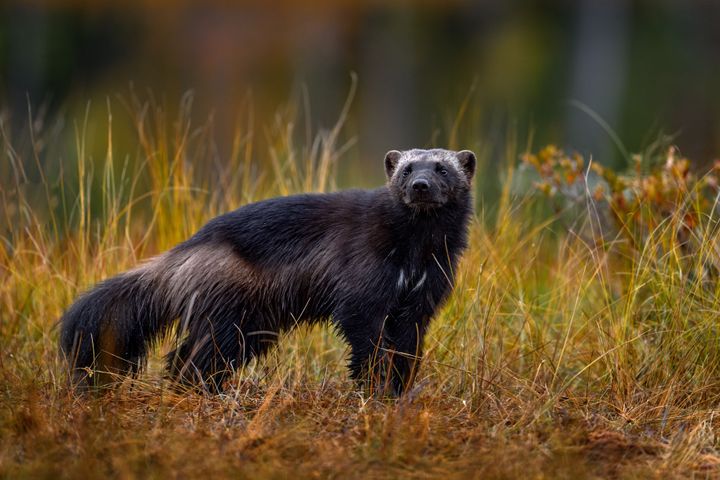
The wolverine is a symbol of wilderness throughout the northern hemisphere. Researchers from the Norwegian University of Life Sciences (NMBU) have just published the latest results from a large international monitoring project.
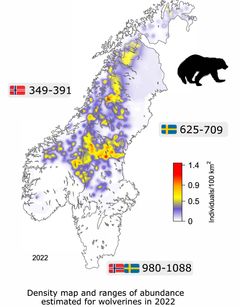
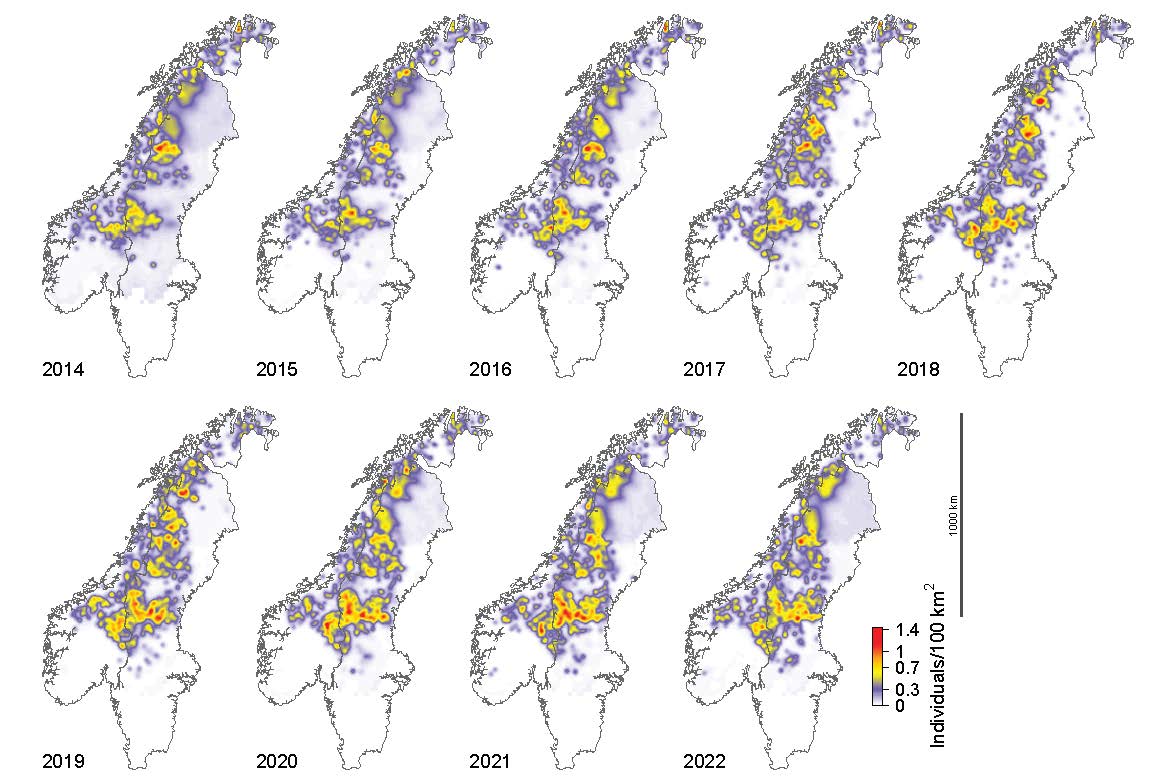
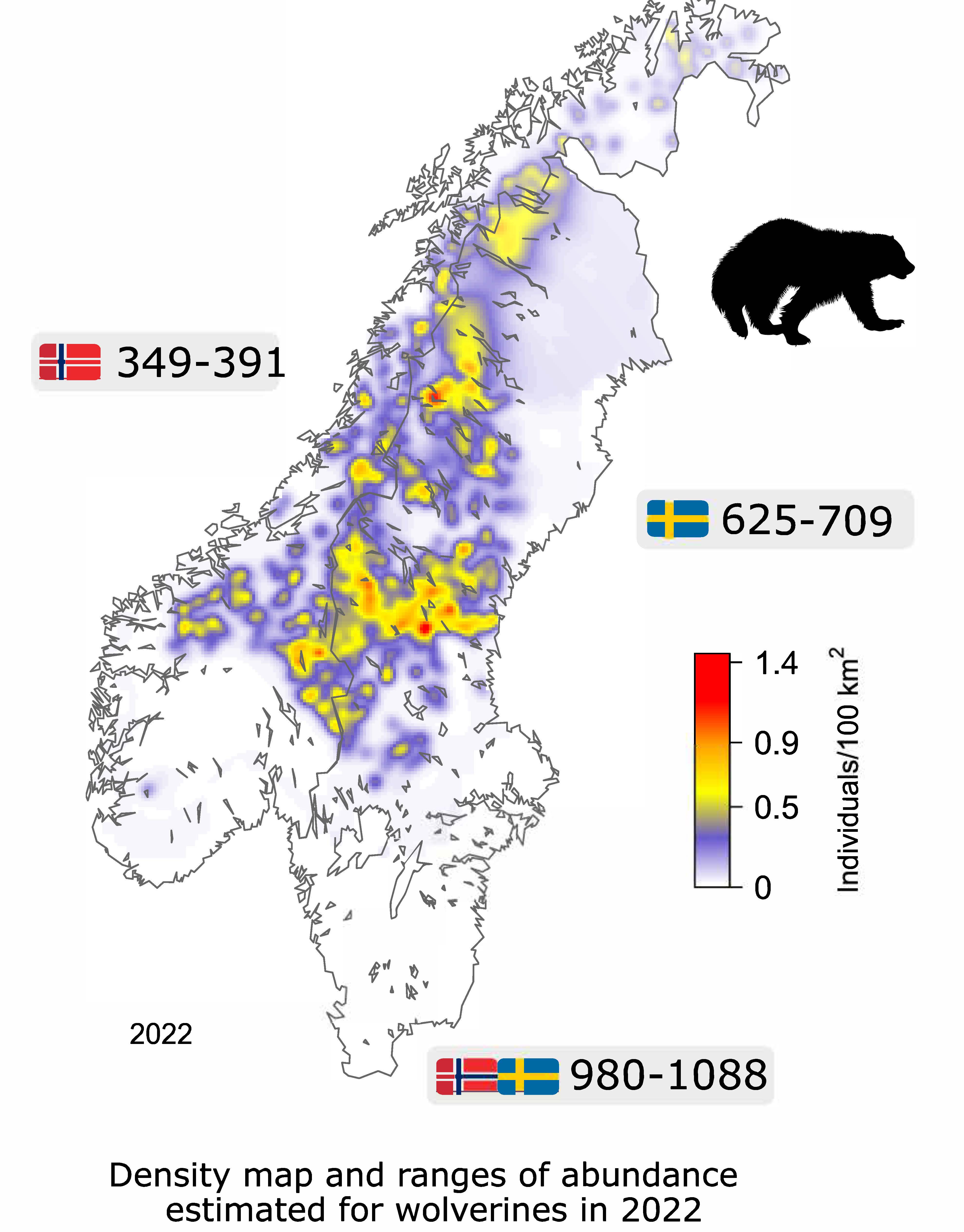
“Instead of just numbers, we create maps of large carnivore populations, like the wolverine.” says Cyril Milleret, researcher at NMBU and first author of the report.
“Maps are much more useful than just numbers, as they tell us where and how many”, explains Milleret. “This information gives wildlife managers a more comprehensive picture of the population.”
A Norwegian-Swedish-population
“This winter we estimate that the total size of the Scandinavian wolverine populations is between 980 and 1088 individuals,” Milleret says.
This is a slight decrease from last year, when the population was estimated to range between 1028 and 1115 wolverines.
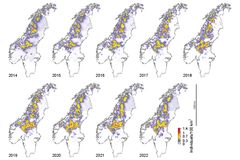
This year’s map and population size estimates are just the latest in a 9-year time series. The population has been growing slightly over this period, but a closer look reveals that this is due to population growth in Sweden. The Norwegian population has remained stable.
Animals do not see borders
It is difficult separating the animals into nationalities. Wolverines on both sides of the border are part of the same population; in fact, many individuals spend time in both countries. This is why transnational monitoring and analysis are so important.
Milleret points out:
“Instead of just a single population size estimate, we provide a range of values that likely contains the real number of wolverines in Scandinavia.”
“We want to make managers, policy makers, and the public aware that model-derived estimates are always uncertain.”
Wildlife populations as surfaces
“Wildlife populations are not simply piles of animals”, adds NMBU professor Richard Bischof, leader of the research team and co-author of the report.
“We think, it is more useful to think of wildlife populations as surfaces draped across the landscape: there are places with higher densities, places with lower densities or even areas without animals.”
“Knowing what that surface looks like and how it changes over time, will help us better understand how animals interact with their environment”.
For example, a map of the density of large carnivores could inform about the predation risk to livestock. Or it could reveal areas of unusually low densities that warrant a closer look at potential threats.
National and international collaboration
NMBU-led project RovQuant provides quantitative information and tools for improved monitoring and management of large carnivores in Scandinavia. The team is collaborating with wildlife managers and researchers in Norway, Sweden, the USA, Germany, and Italy. Rovdata at the Norwegian Institute for Nature Research, and wildlife management agencies in Norway and Sweden are key partners. The work is funded by the Norwegian Environment Agency, the Swedish Environmental Protection Agency, and the Research Council of Norway.
More information?
The results are published in the report "Estimates of wolverine density, abundance, and population dynamics in Scandinavia, 2014-2022". The report can be downloaded for free via ResearchGate here (ekstern link).
- Applied quantitative ecology group (AQEG)
- Public repository for sharing material associated with Scandinavian carnivore spatial capture-recapture (SCR) analyses conducted via the project: https://github.com/richbi/RovQuantPublic
Keywords
Contacts
Cathrine GlosliKommunikasjonsrådgiverFakultet for miljøvitenskap og naturforvaltning
Tel:95701602Tel:95701602cathrine.glosli@nmbu.noRichard BischofProfessorNMBU / Fakultet for miljøvitenskap og naturforvaltning
Jeg arbeider i skjæringspunktet mellom forskning og anvendelsen av forskningsresultater innen viltforvaltning og bevaring.
Images
About Norges miljø- og biovitenskapelige universitet (NMBU)
 Norges miljø- og biovitenskapelige universitet (NMBU)
Christian Magnus Falsens vei 30
1433 Ås
67 23 00 00/ 917 33 440 (pressevakt)https://www.nmbu.no/
NMBU har studier og forskning som møter de store globale spørsmålene om miljø, bærekraftig utvikling, bedre folke- og dyrehelse, klimautfordringer, fornybare energikilder, matproduksjon og areal- og ressursforvaltning.
Subscribe to releases from Norges miljø- og biovitenskapelige universitet (NMBU)
Subscribe to all the latest releases from Norges miljø- og biovitenskapelige universitet (NMBU) by registering your e-mail address below. You can unsubscribe at any time.
Latest releases from Norges miljø- og biovitenskapelige universitet (NMBU)
Hvordan kan miljøet rundt oss gi økt kreftrisiko hos barn og unge?24.3.2026 14:11:38 CET | Pressemelding
Et nytt europeisk forskningsprosjekt undersøker hvordan luft, nærmiljø og sosiale forhold kan påvirke kreftrisikoen hos barn og unge.
NMBU og NIBIO leder nytt nasjonalt senter for bærekraftig arealbruk23.3.2026 10:00:00 CET | Pressemelding
NMBU og NIBIO skal lede det nye forskningssenteret INLAND, som skal utvikle kunnskap og verktøy for en mer bærekraftig og rettferdig areal- og naturbruk.
Ny forskning: Virus i lufta på avløpsanlegg som håndterer avløp fra Oslo, Asker og Bærum20.3.2026 13:06:14 CET | Pressemelding
Når norske avløpsarbeidere er på jobb, er de utsatt for virus som kan gi sykdom via luften de puster inn. Det viser ny forskning fra NMBU Veterinærhøgskolen og STAMI.
Veterinærhøgskolen, NMBU: Vi trenger et forbud mot privat fyrverkeri nå18.3.2026 14:14:46 CET | Pressemelding
For dyrene handler det ikke om å utholde 12 timer med smell nyttårsaften. Redselen for lyder kan vare livet ut. Vi ved Veterinærhøgskolen mener det er på høy tid å forby privat oppskyting av fyrverkeri.
Norsk forsker vinner prestisjefylt pris i bioteknologi2.3.2026 10:57:51 CET | Pressemelding
For første gang går den internasjonale topp-prisen Novonesis Biotechnology Prize til en norsk forsker; Vincent Eijsink ved NMBU. Prisen deles ut av Novo Nordisk Fonden og anerkjenner banebrytende forskning med høy samfunnsmessig betydning.
In our pressroom you can read all our latest releases, find our press contacts, images, documents and other relevant information about us.
Visit our pressroom